The Short Answer: One Primary Keyword, A Few Related Terms
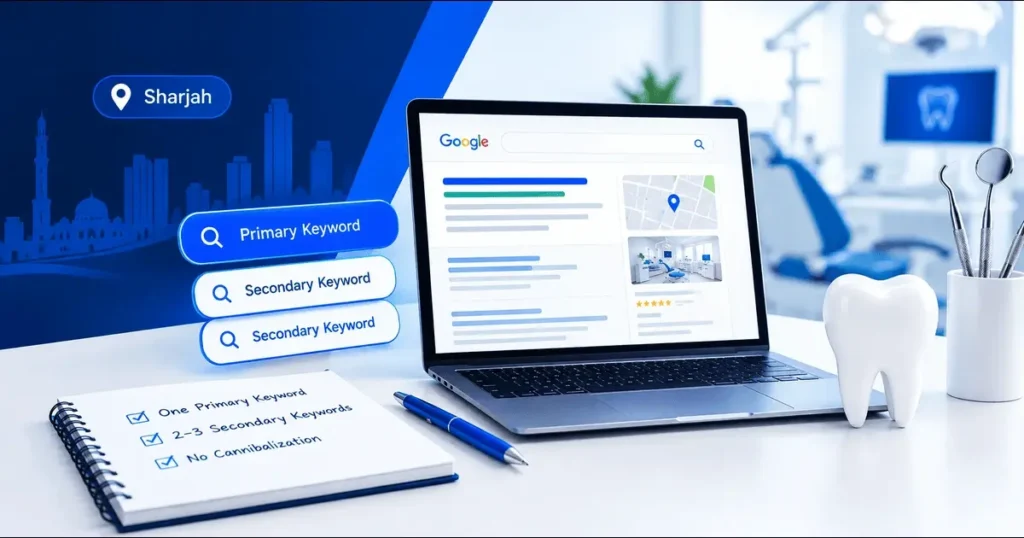
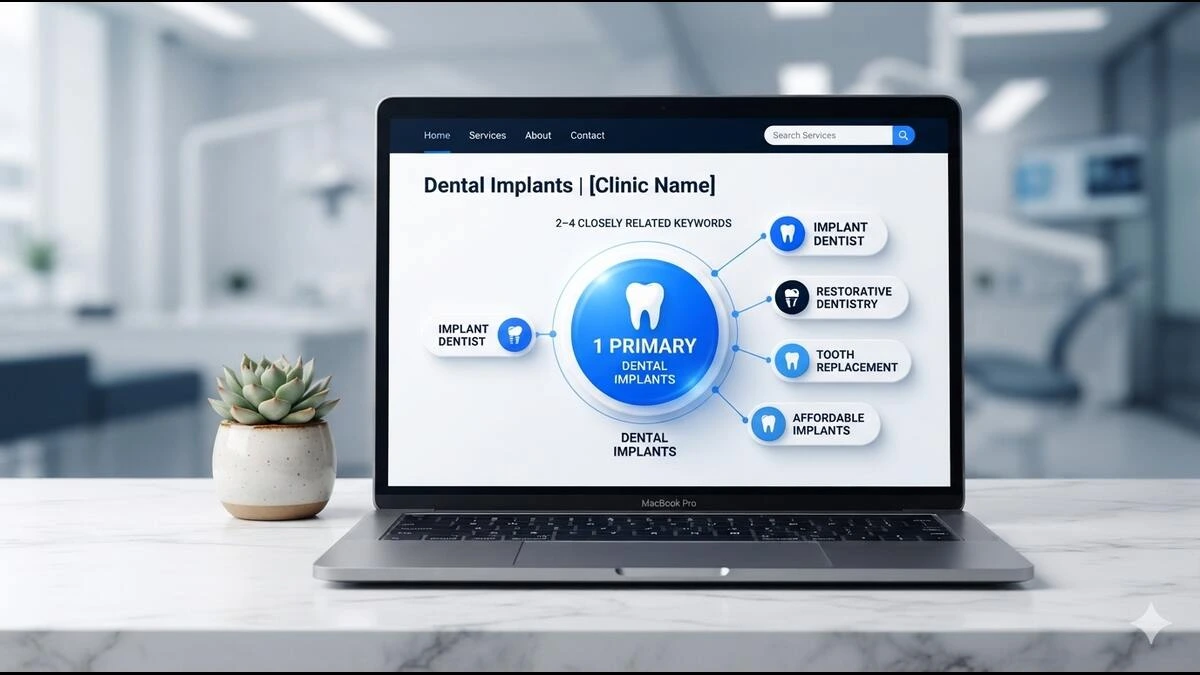
Every service page should be built around one clear keyword. That’s the phrase a patient would actually type into Google.
Around it, a page can naturally carry two or three related terms, without forcing them in. A page written this way often ends up ranking for far more phrases than it was ever directly optimised for.
Research from Ahrefs found that a page holding the #1 spot for its main keyword typically also ranks in the top 10 for close to 1,000 other related search terms. That spread comes from depth on one topic, not from a long keyword list.
Why Too Many Keywords Hurt a Sharjah Dental Page
Targeting one page for several unrelated keywords usually backfires.
Google has to guess which search each page is meant to answer. When two of your own pages compete for the same phrase, Google often ranks both lower than a single, focused page would rank on its own.
This is really a search intent problem wearing a keyword-count costume. A page built for too many keywords is usually a page that never decided who it’s for.
What Keyword Cannibalization Looks Like on a Dental Website
This problem has a name: keyword cannibalization. On dental sites, it usually shows up as:
- A general “Services” page and a specific treatment page both targeting “dentist Sharjah.”
- Two blog posts both trying to answer “how much do dental implants cost.”
- A homepage and an “About” page both aimed at the clinic’s name plus location.
Each keyword should belong to exactly one page.
How Many Keywords Fit an 800–1,200-Word Treatment Page
Content length sets a natural ceiling on keyword count.
A short 500-word page can carry one primary keyword and maybe one secondary term before it starts to feel forced. A fuller 800–1,200-word treatment page — the length that works well for most Sharjah clinic service pages — can usually support one primary keyword plus two to four secondary or long-tail variations.
Past that point, extra “keywords” usually aren’t separate phrases at all. They’re close variations Google already reads as the same topic.
How to Map Keywords to Each Service Page
A simple keyword map prevents overlap before a single page gets written.
- List every treatment and topic the clinic covers.
- Group related search phrases under each one by what the searcher wants, not by wording.
- Assign each phrase to exactly one page — service page, blog post, or FAQ.
- Check the map for repeats before publishing anything new.
This step takes an afternoon. Skipping it is the most common reason two pages end up competing for the same ranking months later. This full breakdown of matching keywords to service pages walks through the process in more depth.
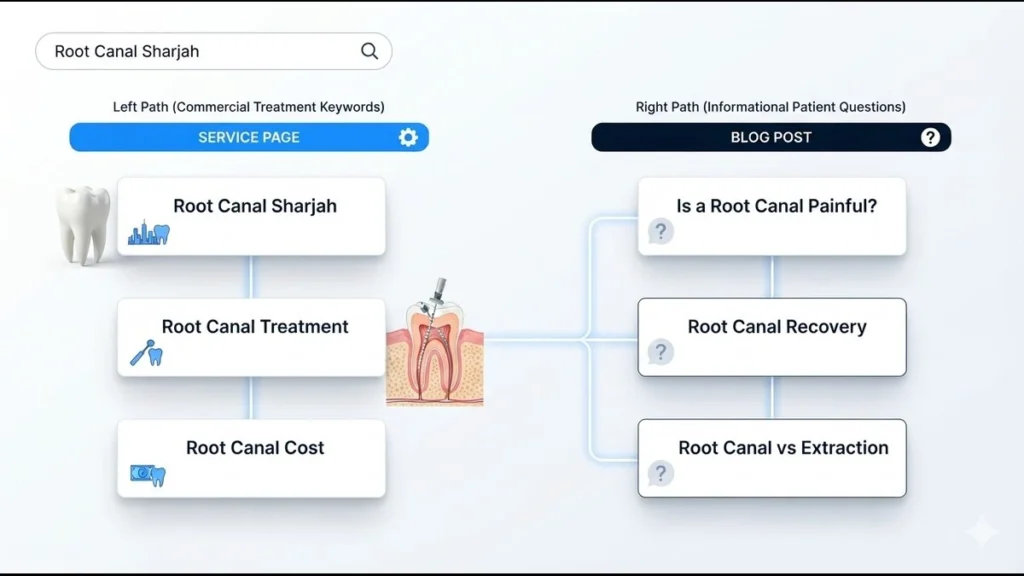
Example: Keyword Map for a Sharjah Root Canal Page
| Page | Primary Keyword | Secondary Keywords |
|---|---|---|
| Root canal treatment page | root canal Sharjah | root canal cost, root canal pain, same-day root canal |
| Root canal blog post | is a root canal painful | root canal recovery, root canal vs. extraction |
The service page owns the buying-intent term. The blog post owns the research-stage questions. Neither one competes with the other.
Common Mistakes Sharjah Clinics Make With Page Keywords
- Repeating “dentist Sharjah” on every page instead of picking one page to own it.
- Writing a new blog post for every treatment question without checking the existing keyword map first.
- Copying a treatment page for a new area — Al Nahda, Muwaileh, University City — and changing only the location name, which often just moves the cannibalization problem instead of fixing it.
- Chasing a long keyword list on one page instead of one focused topic that naturally attracts related searches.
Frequently Asked Questions
What's the maximum number of keywords a single page can rank for?
There’s no fixed limit. A page can rank for hundreds of related phrases once it thoroughly covers one topic — but that comes from depth and structure, not from a keyword list you write into the page.
How many keywords should a short blog post target?
A post under 600 words works best with one primary keyword and, at most, one closely related secondary term. Longer, more detailed posts can carry more without feeling forced.
Should every treatment get its own page?
For treatments with real search demand — implants, Invisalign, root canals, and similar procedures — yes. Each one deserves a dedicated page rather than a shared paragraph on a general services page.
Next Step
Keyword count matters less than keyword ownership. A keyword map that gives one clear topic to each page — service pages, treatment pages, and blog posts — is what actually moves rankings, more than adding another keyword to a page you’ve already written.
Not sure which of your Sharjah clinic’s pages are already competing with each other? Get a free SEO audit and I’ll show you exactly where the overlaps are.