
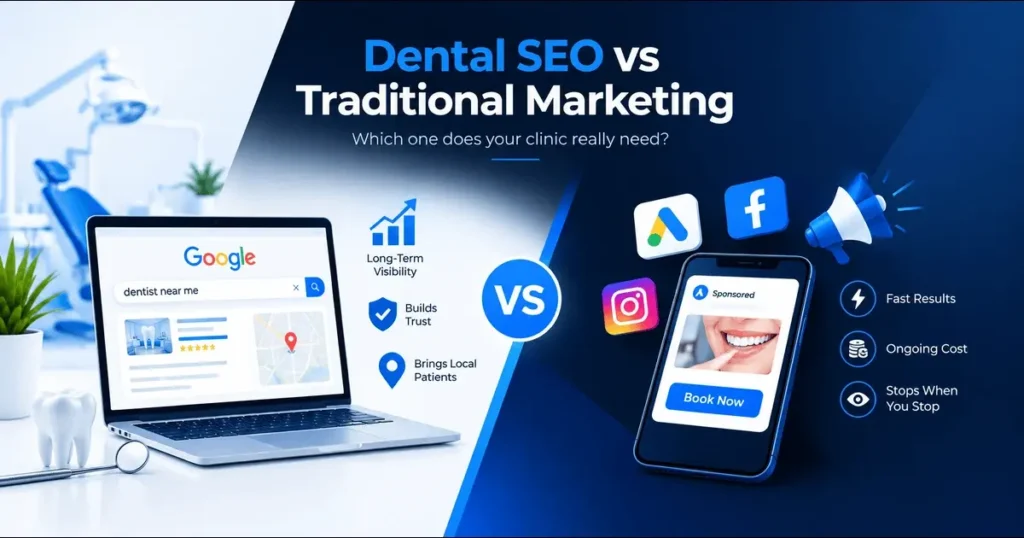
Dental clinics often ask the same question. Should they invest in SEO, or stick with the marketing they already know? The honest answer depends on what the clinic actually needs: quick patient volume, or lasting visibility that compounds over time.
This article breaks down the real difference between Dental SEO and traditional digital marketing. It also explains which one fits a small, private dental clinic best, and when both should work together.
What Is Dental SEO, Exactly?
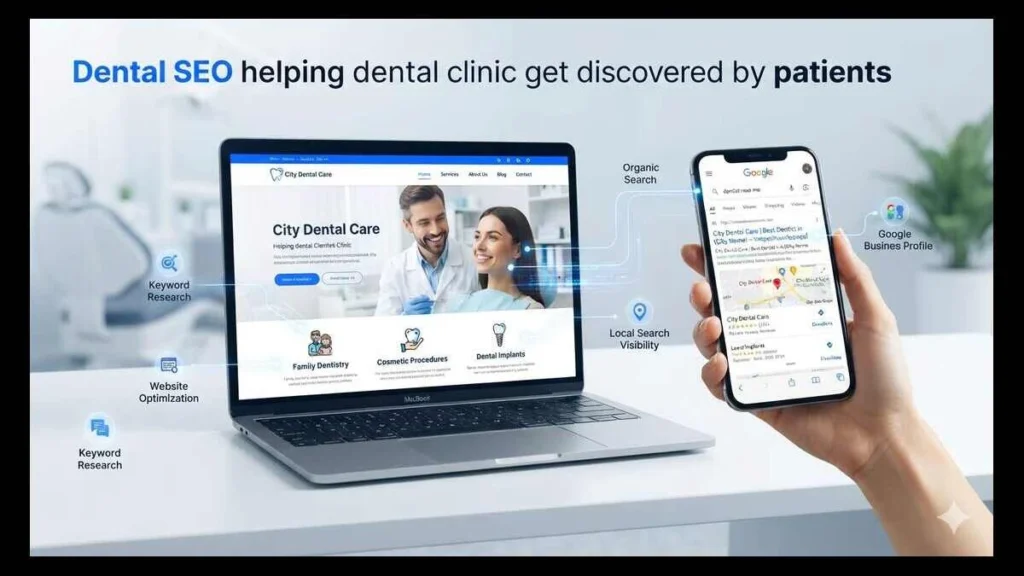
Dental SEO is the process of improving a dental clinic’s website and online presence so it appears when patients search for dental services on Google. It covers keyword research, service pages, Google Business Profile, technical health, and content built around patient questions.
Unlike a one-time ad campaign, Dental SEO is a compounding asset. Once a page ranks for “dentist in Sharjah” or “dental implants near me,” it keeps attracting patients without a daily ad spend. We’ve covered this in more depth in What Is Dental SEO for Small Clinics in Sharjah?
Dental SEO is not just about keywords. It is a full dental marketing strategy built around how patients actually search, click, and choose a clinic.
What Counts as "Traditional Digital Marketing" for a Dental Clinic?
Traditional digital marketing covers the paid, short-term side of promotion. For a dental clinic, this usually includes:
- Pay-per-click (PPC) ads on Google
- Paid social media ads (Facebook, Instagram)
- Print ads, flyers, and local newspaper listings
- Referral programs and word-of-mouth incentives
- Paid directory listings
These channels can work fast. A clinic can launch a PPC campaign today and get calls tomorrow. But the visibility disappears the moment the budget stops.
Dental SEO vs Traditional Digital Marketing: Side-by-Side
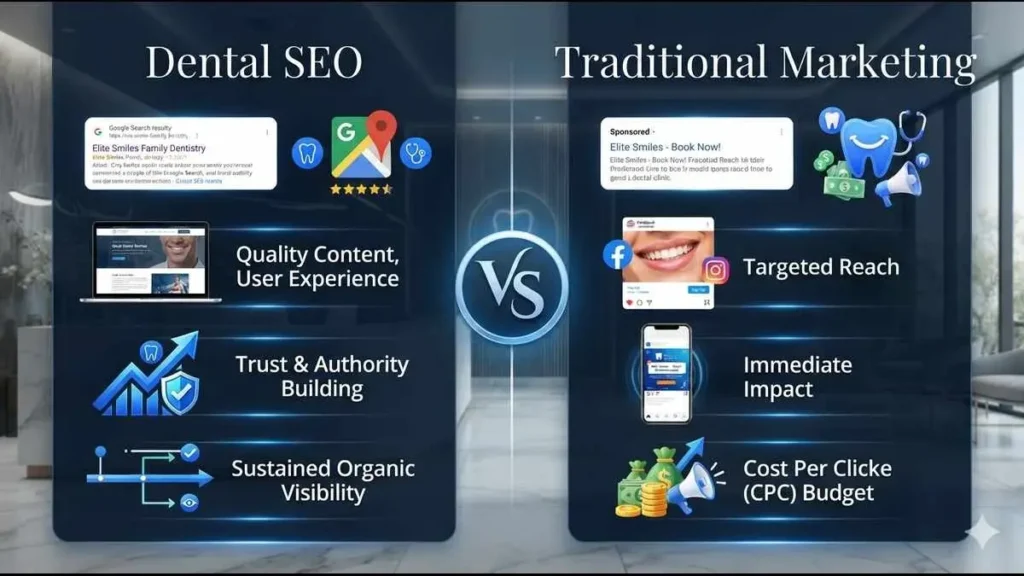
| Factor | Dental SEO | Traditional Digital Marketing |
|---|---|---|
| Speed of results | Slower to build (weeks to months) | Fast (can start same day) |
| Cost over time | Lower long-term cost | Ongoing spend, cost rises with competition |
| Longevity | Keeps working after setup | Stops when spend stops |
| Patient trust | High — organic results feel earned | Lower — patients know it’s an ad |
| Targeting precision | Matches real search intent | Broad, interest-based targeting |
| Best for | Long-term, sustainable growth | Short-term visibility, new launches, promotions |
Neither channel is automatically “better.” The right choice depends on the clinic’s goal, budget, and timeline.
Where Traditional Digital Marketing Still Works
Traditional digital marketing has real use cases for a dental clinic. It works well for:
- Launching a new clinic that has zero online presence yet
- Promoting a limited-time offer, like a teeth-whitening special
- Filling appointment slots quickly during a slow month
- Testing a new service before committing to long-term content
For these situations, paid campaigns can bring in patients while the clinic’s organic search for dental clinics is still being built in the background.
Where Dental SEO Wins for Small Dental Clinics
Local Search and Google Maps
Most dental patients search close to home. A small clinic in Sharjah competing for “dentist near me” needs strong local relevance, not just a website. This is why Local Dental SEO and a well-optimized Google Business Profile often outperform generic ads for local intent searches.

Long-Term Cost Efficiency
A PPC campaign charges per click, forever. A well-optimized page keeps ranking without a recurring bill for that specific click. Over a year or two, this shifts the cost curve heavily in favor of SEO for dentists who plan to stay in business long-term.
Trust and Credibility
Patients tend to trust organic results more than ads, especially for healthcare decisions. Ranking naturally for a treatment search signals credibility before the patient even opens the website.
We looked at why this visibility gap happens in Why Is Dental Clinic Google Search Visibility Low? — most small clinics lose ranking not because of one mistake, but a mix of weak service pages, thin content, and an unoptimized profile.
Can a Dental Clinic Use Both Together?
Yes. In practice, the strongest dental marketing strategy combines both.
A clinic can run a short paid campaign to fill gaps immediately, while its SEO foundation builds in the background. Once the SEO starts ranking, the clinic can reduce ad spend and rely more on organic traffic. This hybrid approach is common among clinics that already understand why Sharjah dentists should invest in SEO as a long-term asset, not a quick fix.
The key is sequencing. SEO should start early, because it takes time to build. Paid ads can be switched on and off as needed.

What Dental Clinics Actually Need: A Practical Starting Point
Most small clinics don’t need every marketing channel at once. They need a clear starting point.
- Start with a website audit. Before spending on any channel, find out what’s actually broken. A Dental Website Audit shows the technical, content, and local SEO gaps holding the site back.
- Research what patients are actually searching for. Dental Keyword Research reveals the exact terms and questions patients use before choosing a clinic.
- Build content around real patient questions. A solid Dental Content Strategy turns those keywords into pages and posts that actually convert visitors into booked appointments.
- Add paid campaigns only where there’s a clear, short-term goal.
This order matters. Spending on ads before fixing the website usually wastes budget.
Common Mistakes Dental Clinics Make When Choosing a Marketing Strategy
- Running paid ads to a website with weak service pages and no local content
- Expecting Dental SEO to show results in days instead of months
- Treating SEO and traditional marketing as competitors instead of complementary tools
- Ignoring the Google Business Profile while investing heavily in the website
- Choosing a marketing plan based on what a big hospital chain does, instead of what fits a small, private clinic
Frequently Asked Questions
Is Dental SEO better than traditional advertising?
Dental SEO is generally better for long-term, sustainable patient growth, because the visibility keeps working after setup. Traditional advertising is better for immediate, short-term results. Most clinics benefit from using both at different stages.
How long does Dental SEO take to show results?
Dental SEO usually takes a few months to show meaningful movement, and longer in competitive areas. The timeline depends on the site’s starting condition, competition, and how consistently the strategy is executed.
Do dental clinics still need traditional marketing?
Yes, in specific situations. New clinics with no online history, or clinics promoting a time-limited offer, often benefit from traditional or paid marketing alongside their SEO work.
Is Dental SEO expensive for a small, private clinic?
Dental SEO typically costs less over time than ongoing paid advertising, because a clinic isn’t paying per click once a page ranks well. The upfront investment goes into research, content, and optimization rather than continuous ad spend.
Can a dental clinic run SEO and paid ads at the same time?
Yes. Many clinics run both together, using paid ads for quick visibility while their SEO foundation builds in the background. Over time, most clinics shift more budget toward SEO as it starts to perform.
What is the real difference between Dental SEO and general digital marketing?
Dental SEO focuses specifically on organic visibility in Google Search and Google Maps for dental-related searches. Digital marketing is a broader term that includes paid ads, social media, and other promotional channels alongside SEO.
Which Strategy Fits Your Clinic?
There’s no single right answer for every clinic. A new practice may need short-term ads. An established clinic losing ground to competitors may need a stronger Dental SEO foundation.
The only way to know for sure is to look at what’s actually happening on your website and in local search right now.
Get a Free SEO Audit to see exactly where your clinic stands, and which strategy — SEO, traditional marketing, or both — will bring in the most patients for your budget.