

Dental keyword research for a dental clinic using Google search data

Dental Keyword Research: Best Dentist Keywords for Your Clinic

What Is Dental Keyword Research?

Dental keyword research is the process of finding the words, phrases, and questions people use when searching for dental treatments, information, or a clinic nearby.
It tells you:
  • What topics you should write about.
  • Which specific page should target which term.
  • How much competition exists before you spend time writing.
Dentist Keywords Examples Search Intent Type Difficulty
Emergency dentist near me Local / Transactional High
Best pediatric dentist in Sharjah Local / Transactional Medium
Root canal treatment cost Commercial Investigation Medium
How to relieve toothache fast Informational Low

Why Finding the Right Dentist Keywords Matters

Without it, content gets built entirely on assumptions.
 
For example, a clinic in Sharjah might write a long blog post about “the benefits of dental implants.” However, local patients might actually be searching for “dental implant cost in Sharjah” or “same-day dental implants in Al Nahda.”
 
Both topics relate to implants, but they answer completely different questions and belong on different pages. Dental keyword research catches that mismatch before you publish, not after.


How to Do Dental Keyword Research (Step-by-Step)

1. List Every Treatment You Offer

Start with a plain list: cleanings, root canals, implants, Invisalign, emergency care — whatever your clinic actually provides. This becomes your seed list, the foundation every other keyword builds from.

2. Expand the List With Free Tools

Type each seed term into Google’s autocomplete and the “People also ask” box. Next, check your Google Search Console. Search Console shows queries your site already ranks for (even at position 40), which are often the easiest wins.
(Note: A professional Dental Website Audit surfaces this data automatically alongside any technical issues holding a page back).
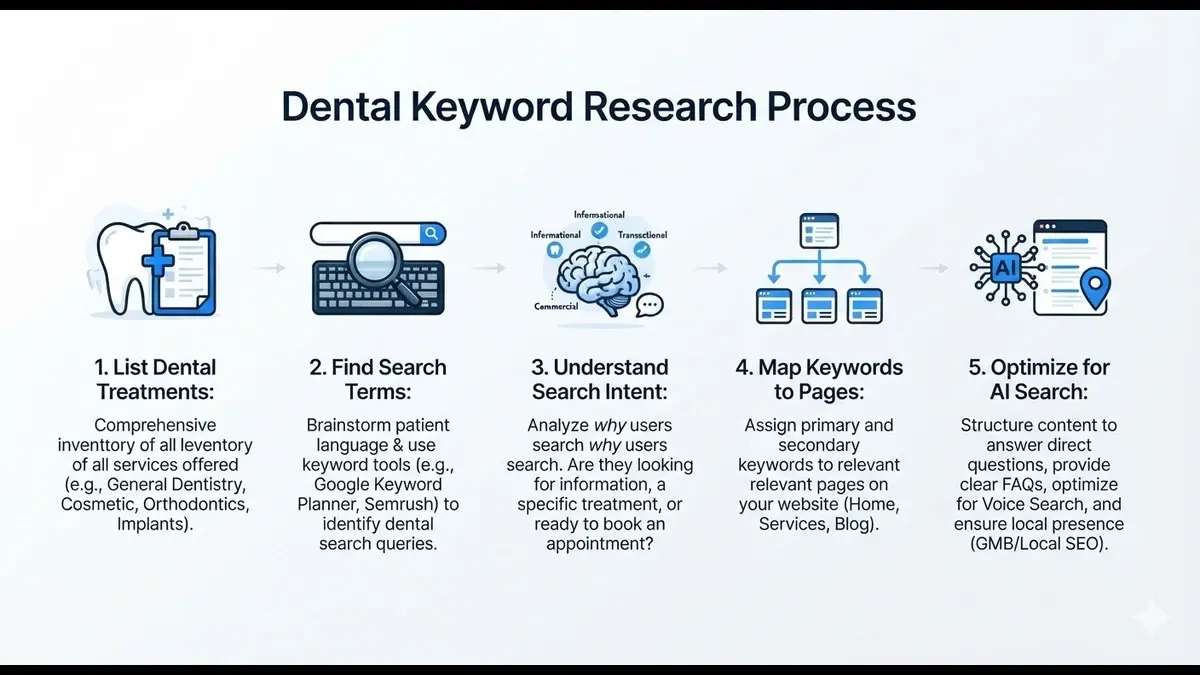
Five-step dental keyword research process showcasing the best dentist keywords for SEO optimization


3. Match Each Keyword to Search Intent

Every keyword falls into one of three buckets:
 
    • Informational: Patients researching (e.g., “What are dental implants?”)
    • Commercial: Patients comparing options (e.g., “Invisalign vs. traditional braces”)
    • Local/Transactional: Patients ready to book right now (e.g., “best pediatric dentist in Muwaileh” or “dental emergency clinic near me”)

Treat them differently based on what the user wants to find.
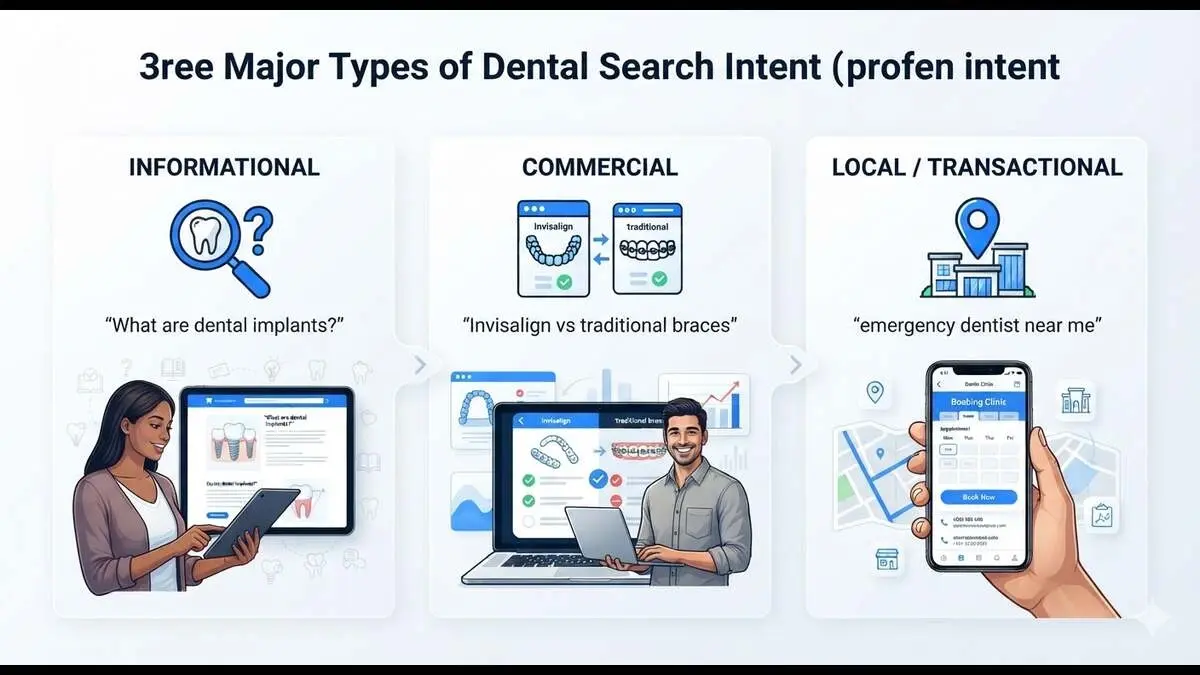
Dental search intent chart showing informational, commercial, and local transactional dentist keywords list
 

4. Map Each Keyword to One Page

Assign one primary keyword per page. Service pages should target local and commercial terms; blog posts should target informational, long-tail questions. This single step prevents two pages from quietly competing for the same search — a common reason posts underperform.
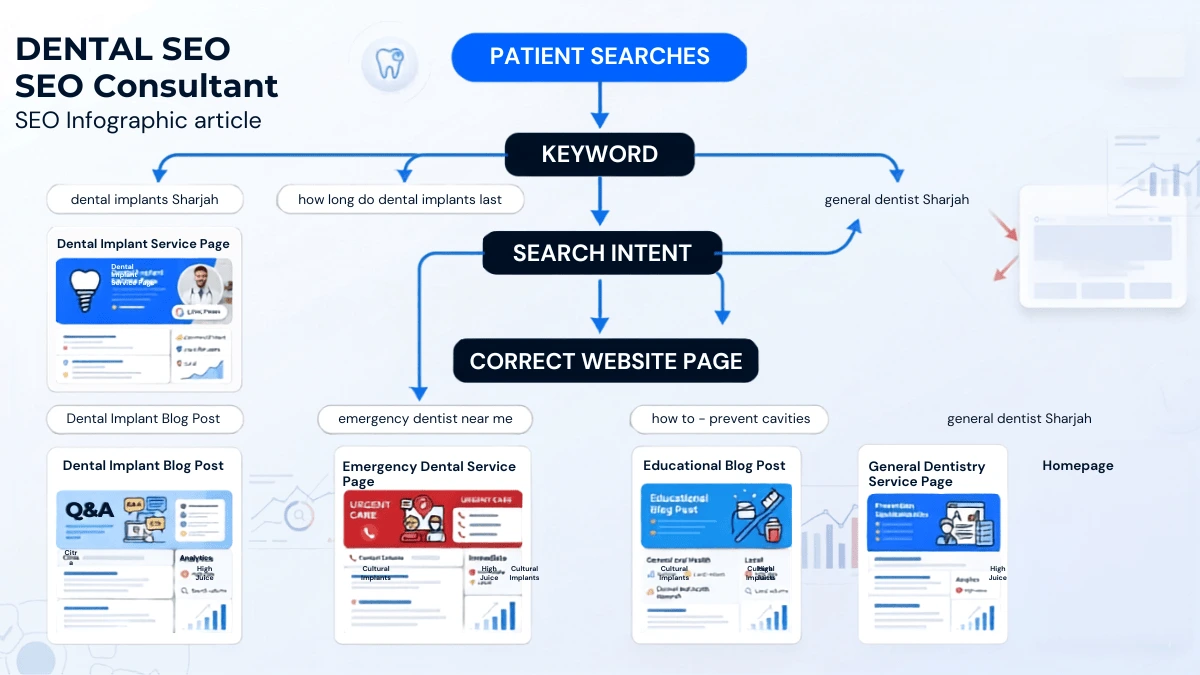
Dental keyword mapping from search terms to service and blog pages

5. Account for AI Overviews (GEO)

Google increasingly answers simple questions directly, before a click happens. Write content that covers a topic fully, not just one exact phrase, so both traditional rankings and AI-generated answers (Generative Engine Optimization or GEO) have a reason to reference the page.

Google’s own SEO guidance points the same direction: match content to what people are actually trying to accomplish.

Common Dental Keyword Research Mistakes

  • Chasing only high-competition head terms: Focusing blindly on broad words like “dentist,” while ignoring long-tail phrases that are far easier to rank for.
  • Ignoring location modifiers: Forgetting to add localized keywords, which matters most for a private clinic competing in specific areas like Al Majaz, Al Khan, or Al Qasimia.
  • Publishing without mapping: Letting two or more blog posts quietly fight for the exact same keyword (Keyword Cannibalization).
  • Skipping Search Console data: Missing out on valuable terms your website is already ranking for on page two or three of Google.


Turn Keyword Research Into a Content Plan

Keyword research only pays off once it’s organized. Group related terms into a cluster, build one hub page, and support it with focused blog posts.

Make sure each cluster ties back to a real service page — root canals, implants, whatever the keyword is actually about — not just another blog post.

Pair this with a clear dental content strategy and solid on-page SEO so the keywords you’ve found actually convert into rankings.
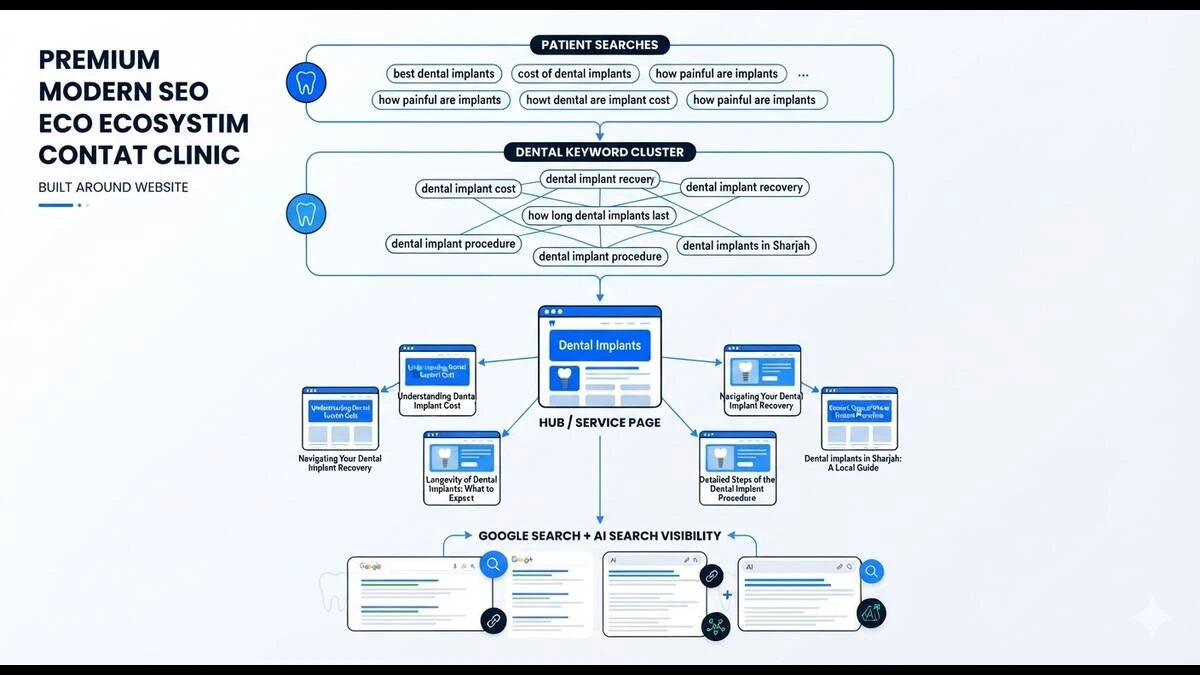
Dental keyword cluster connecting blog content service pages and AI search visibility

Frequently Asked Questions

What's the difference between dental keyword research and dental SEO?

Dental keyword research is one part of dental SEO. It tells you what to target; the rest of dental SEO — technical setup, content, links — determines whether you rank for it.

How many keywords should one dental page target?

One primary keyword, plus a handful of closely related terms it naturally covers. Too many unrelated keywords on one page usually weakens rankings for all of them.

Are free tools enough for dental keyword research?

For most clinics, yes. Google Search Console, autocomplete, and “People also ask” cover the basics. Paid tools like Ahrefs or Semrush help once you’re managing dozens of pages.

Should a dental site target short-tail or long-tail keywords first?

Long-tail first. They carry less competition and closer-to-booking intent, and Search Console data usually shows the site already ranks nearby for several.

How often should dental keyword research be updated?

Every few months, or whenever a new service launches. A keyword list built a year ago rarely reflects what patients search today.

Ready to Find Your Clinic's Best Keywords?

Keyword research only works when the right on-page setup follows it. If current pages aren’t ranking despite good content, a free SEO audit shows exactly which keywords and pages need attention first.

Leave a Comment

Your email address will not be published. Required fields are marked *