

Dental website SEO traffic turning into new patients

Why Some Dental Websites Get Traffic but No New Patients

Dental website SEO often gets blamed for slow patient growth. But rankings and traffic are rarely the real problem. The gap usually sits between the click and the call.

A visitor can find your practice through solid dental website SEO and still leave without booking. That’s a dental SEO conversion problem, not a visibility problem.

When Dental SEO Traffic Doesn't Turn Into Patients

Traffic and patients are different metrics. One measures visibility. The other measures trust and action.
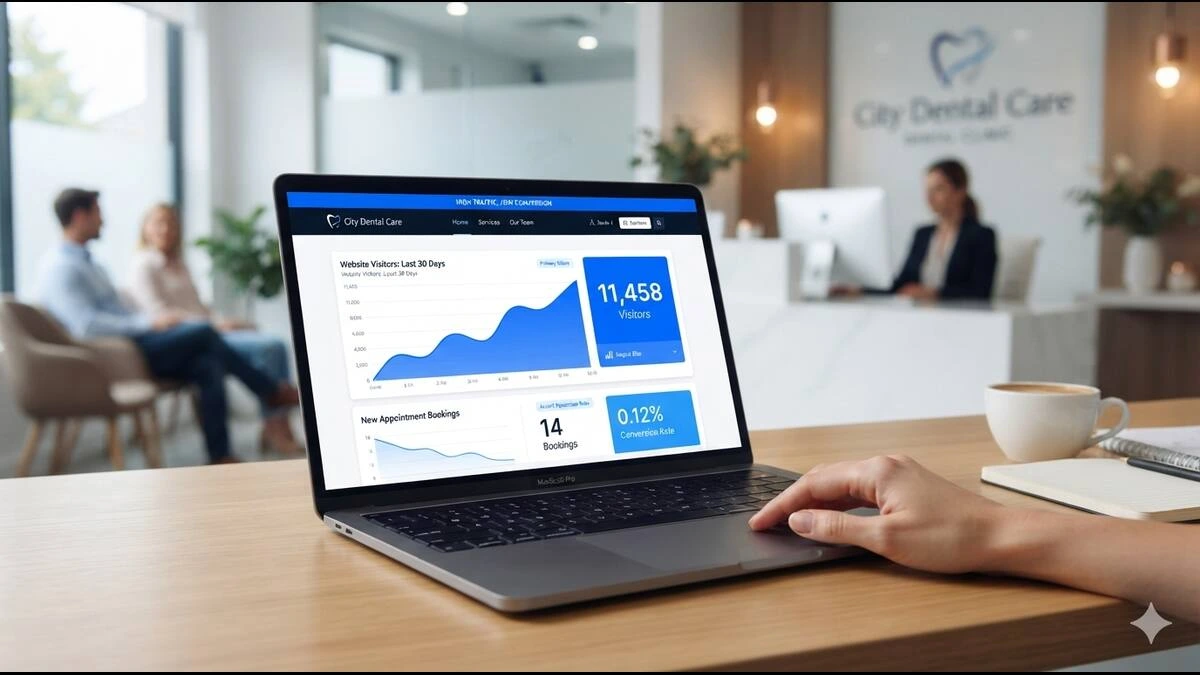
Dental website traffic with low patient conversion

A page can rank well for “dental implants” and still lose the visitor in ten seconds. This happens when the page doesn’t answer their real question, load fast on mobile, or make the next step obvious.

A dependable dental SEO strategy treats visibility and conversion as one system, not two separate projects.

Common Reasons Dental Website Traffic Doesn't Convert

Most practices lose patients at a handful of predictable points:

  • Generic messaging that could describe any dental clinic
  • Weak or buried calls to action
  • No treatment-specific pages for high-intent searches like “emergency dentist” or “implants”
  • Missing trust signals — reviews, credentials, or clear pricing
  • Slow load times or a clunky mobile booking flow

Dental website conversion problems affecting patient bookings

Each one quietly drains dental website traffic before it ever reaches the front desk.

How to Fix Dental SEO Conversion Without a Redesign

Most conversion leaks don’t need a full rebuild. Start with a dental website audit to see exactly where visitors drop off.

Then tighten what already exists:

  • Rewrite service pages around what patients actually search for
  • Add one clear call to action above the fold
  • Show real reviews near every CTA, not just on a testimonials page
  • Make phone numbers and booking buttons easy to tap on mobile

Dental SEO traffic converted into a booked patient appointment

For the full build-out, see What Should a Dental SEO Campaign Include? A Practical Framework — it covers the pieces that support this fix.

Google’s own page experience guidance confirms that speed and usability shape how visitors behave once they land.

Track the Metrics That Actually Show Growth

Rankings and sessions don’t pay the bills. Calls, form fills, and booked appointments do.

Set up simple tracking for those three actions before changing anything else. Without it, you’re guessing which fix actually worked.

Get a Clear Picture of Your Own Site

Every practice loses patients somewhere in this path. A free SEO audit shows exactly where your dental website SEO and conversion path disconnect — and what to fix first.

Frequently Asked Questions

Why does my dental website get traffic but no new patients?

Usually a mismatch between what the visitor searched for and what the page delivers, weak trust signals, or a booking path that’s harder than it needs to be. Rankings are rarely the actual issue.

What conversion rate should a dental website aim for?

Many practices see roughly 2–5% of visitors turn into an inquiry, though this varies by market, treatment mix, and local competition.

Does fixing dental SEO conversion take as long as improving rankings?

Usually not. Messaging and call-to-action fixes can show results within weeks, while ranking growth typically builds over months.

Can I fix conversion problems without a full website redesign?

Yes. Most conversion issues live in page-level messaging, calls to action, and trust signals — not the overall design.

Leave a Comment

Your email address will not be published. Required fields are marked *